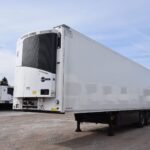

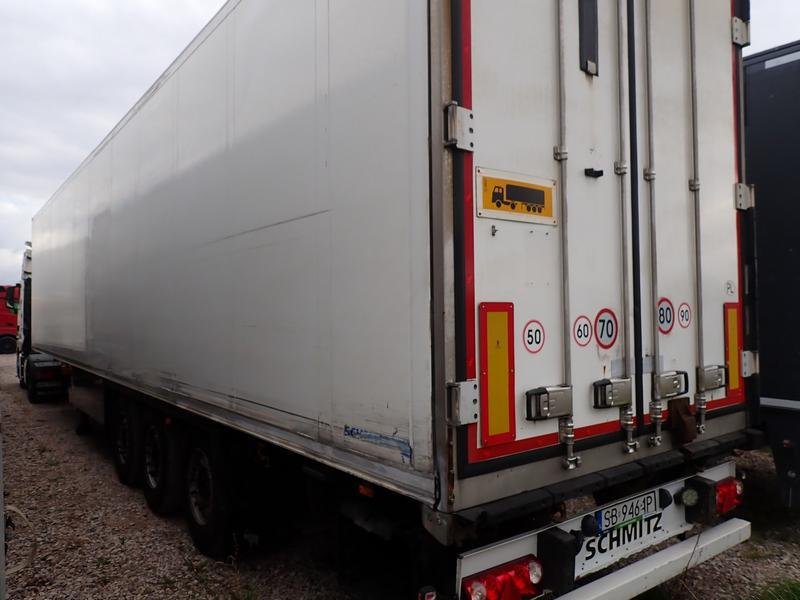
SCHMITZ CARGOBULL SKO 24/L 13.4 FP 60 COOL REFRIGERATOR
Photo Gallery
Basic Info
Description
VEHICLE IDENTIFICATION DATA (*)
Document: [N] X-2025
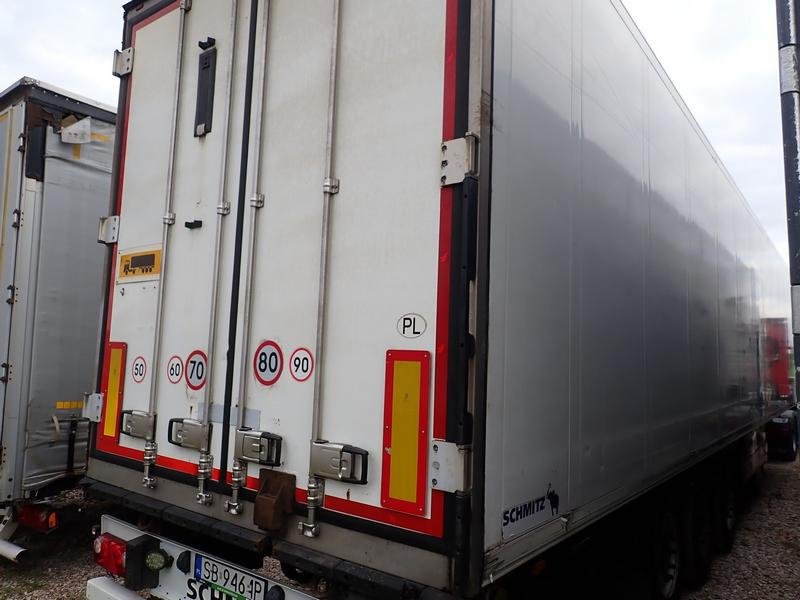
Make: SCHMITZ
Model: SKO 24 35.0t
Version: FP60 COOL/13.4
Vehicle type: Semi-trailer
Year of manufacture: 2014
Registration number: SB9464P
VIN: WSM00000005126794
Date of first registration: 2014/05/08 (in Poland: 2016/11/28)
Technical inspection valid until: 2026/06/20
Operating period of the vehicle (14/05/08 – 25/10/14): 137 months
Permissible total weight / Unladen weight / Payload:
35,000 kg / 8,512 kg / 26,488 kg
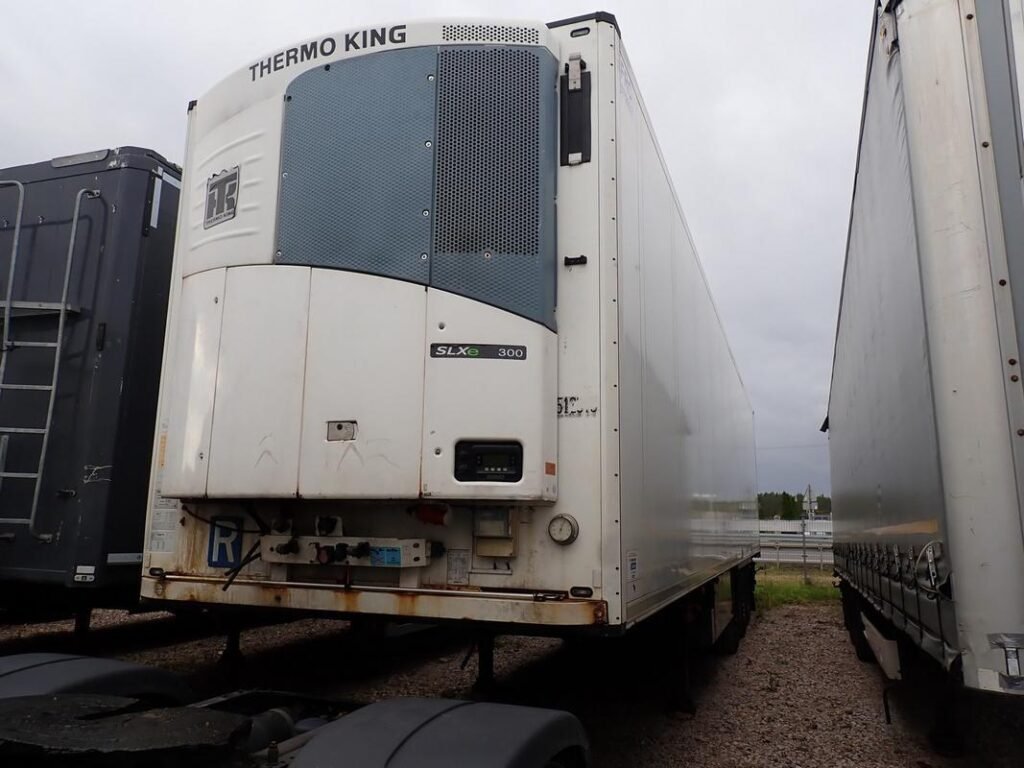
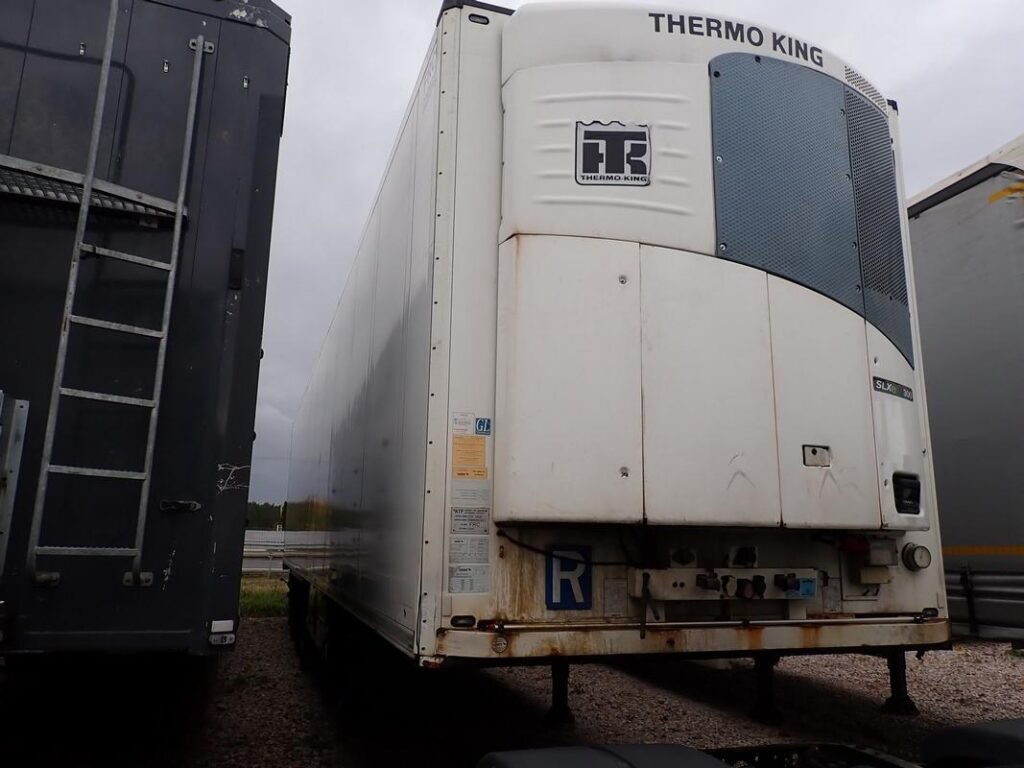
Trailer type: Refrigerated trailer with refrigeration unit
Axle suspension / Axle spacing: Air suspension / 1310 mm
EQUIPMENT
No. – Equipment item name
-
Thermo King SLX 300 refrigeration unit
-
Retractable ladder at the rear of the trailer
-
Basket for 2 spare wheels
-
Rear transverse reflective strip
-
Floor load capacity 5.5 t
-
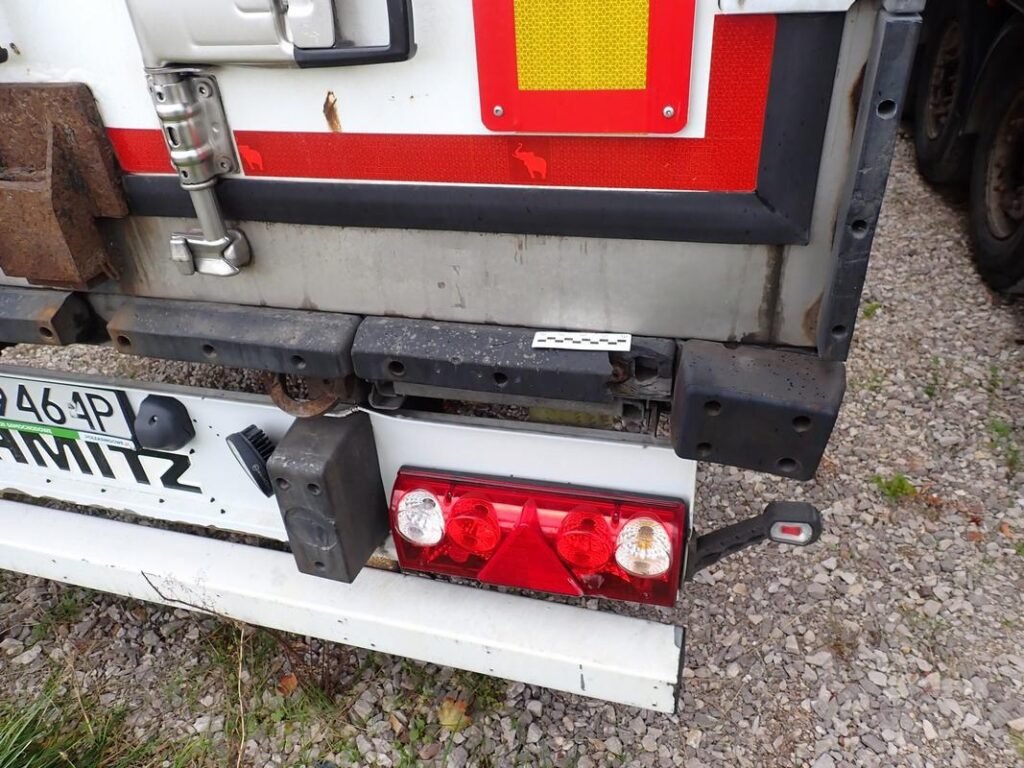
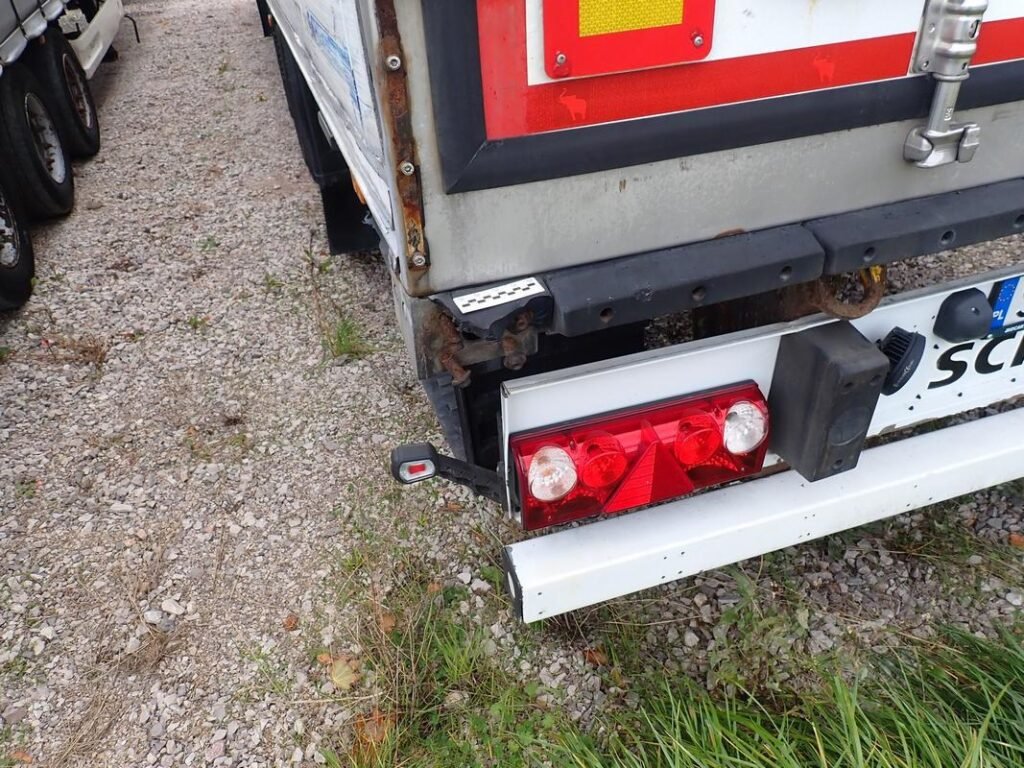
Rubber bumpers on lamp holder – 2 pcs
-
Rubber corner bumpers at rear of vehicle – 2 pcs
-
Aluminum floor
-
Reinforced floor in the rear section
-
Jost parking supports
-
Box for 36 Euro pallets
-
Plastic toolbox
-
2″ coupling pin
-
Electronic braking system (EBS)
-
LED position lights
-
Steel brake discs
-
Chassis lifting/lowering system with AUTO-RESET function
-
Aluminum floor tray, side skirting strip 300 mm
-
Side underrun protection
-
MRH pneumatic suspension
DESCRIPTION OF TYRES INSTALLED ON THE VEHICLE
| Position | Brand, Type | Tread [mm] | Wear [%] |
|---|---|---|---|
| Front left | *GOODYEAR 385/65 R22.5 164K158L K MAX T G2 TL | 4.0 | 87 |
| Front right | *GOODYEAR 385/65 R22.5 164K158L K MAX T G2 TL | 4.0 | 87 |
| 2nd axle left | *GOODYEAR 385/65 R22.5 164K158L K MAX T G2 TL | 6.0 | 76 |
| 2nd axle right | *GOODYEAR 385/65 R22.5 164K158L K MAX T G2 TL | 5.0 | 81 |
| 3rd axle left | *CONTINENTAL 385/65 R22.5 164K HT 3+ HYBRID 20PR | 12.5 | 40 |
| 3rd axle right | *CONTINENTAL 385/65 R22.5 164K HT 3+ HYBRID 20PR | 12.0 | 43 |
VEHICLE TECHNICAL CONDITION
No service documentation for the vehicle was provided.
The chassis (frame) number was read and confirmed to be consistent with the entry in the registration certificate.
The year of manufacture was determined based on the registration certificate.
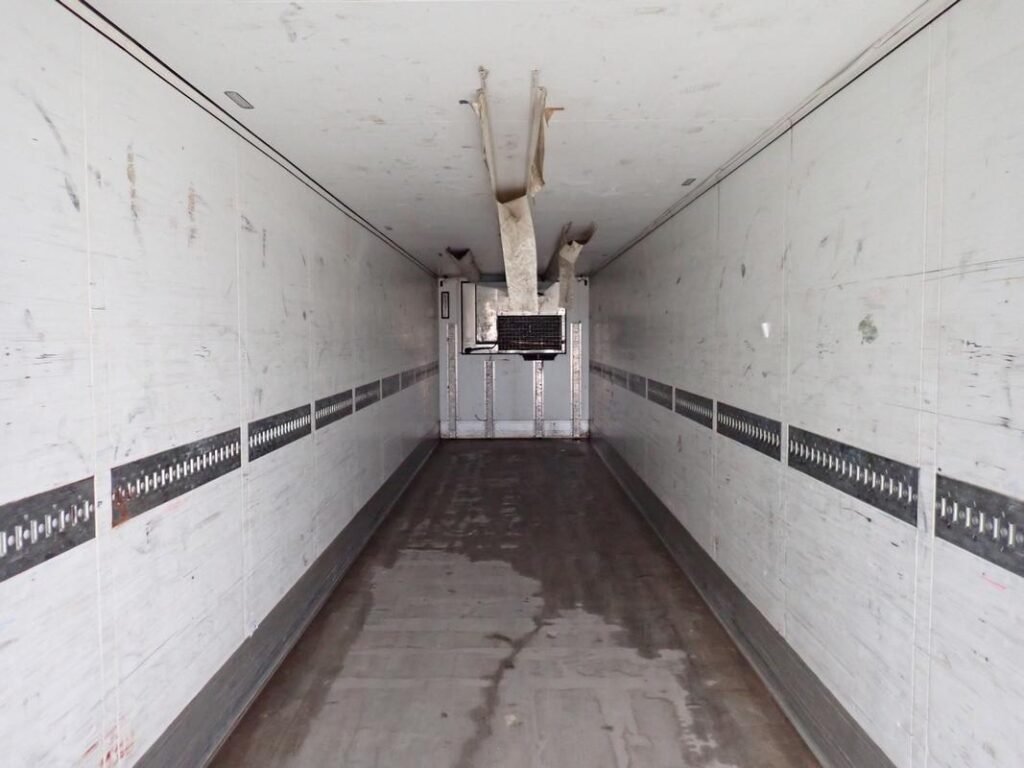
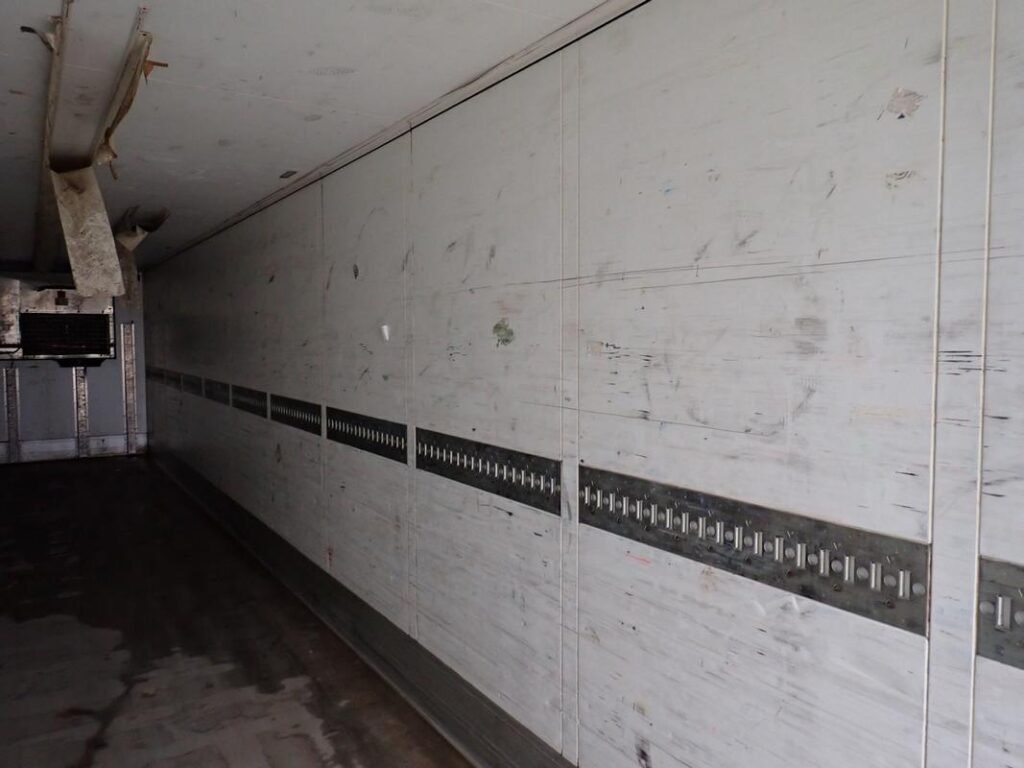
The load compartment has internal dimensions of approximately 13.4 × 2.4 × 2.6 m.
The conditions under which the inspection was carried out, as well as the technical condition of the vehicle, make it impossible to precisely determine its operational condition and completeness.
CHASSIS
Individual suspension components of all wheels show no visible damage.
Verification of clearances in moving joints is only possible under workshop conditions.
REFRIGERATION UNIT
THERMO KING SLXe 300 refrigeration unit.
The operating hours counter was read, the unit was started, and it successfully cooled the interior to the set temperature.
REMARKS
During the inspection, the following damages and defects affecting the market value of the examined vehicle were identified:
-
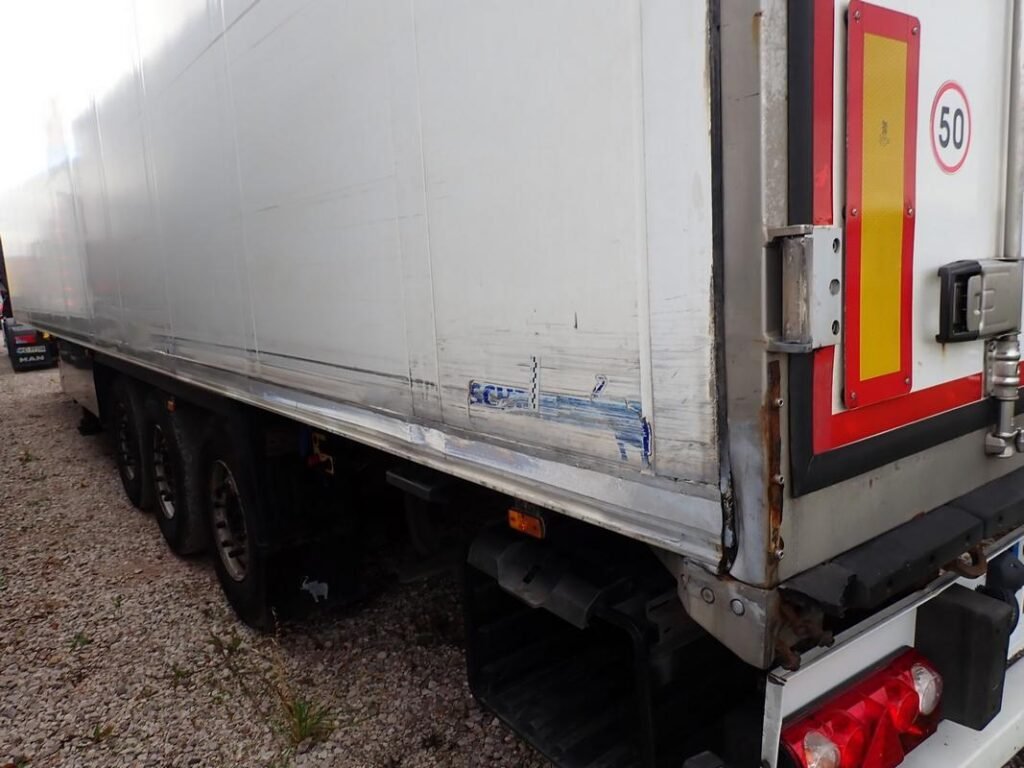
Vehicle interior – damage typical of intensive use
-
Frame – numerous corrosion spots
-
Wheel discs – numerous corrosion spots
-
Walls – dents, scratches, post-repair marks, cracks
-
Residues of advertising film/wrapping
-
Multiple paint stains and spot repairs
-
Rubber bumpers – damaged and incomplete
LIMITING CONDITIONS / DISCLAIMERS
-
The appraiser assumes no responsibility for hidden defects (physical or legal) that could not be identified using the applied inspection methods, nor for any consequences resulting from further use of the assessed object.
-
This valuation does not constitute a technical expertise of the object and may not be considered as such; it also does not guarantee the completeness or operational condition of the object.
-
This report may not be treated as a guarantee that the object will be sold at the estimated value.
-
No verification of the authenticity or correctness of the identification data of the assessed object was carried out, including but not limited to serial numbers and year of manufacture.
-
The appraiser shall not be liable for any damage resulting from reliance on the condition of the assessed object based on information provided by the client, provided there were no grounds to question its accuracy or where determining the actual condition was impossible or significantly impeded.
Location
Get Direction
zrfcnb@gmail.com
-
KRONE SDR FP60 2021
26,500.00€ -
KRONE SDR 27 39.0 t
22,300.00€ -
2. DAF XF 480 SSC 2021
29,000.00€DAF +2 Refrigerator, XF,
-